
Journal Article, 2026
What Can Korea Learn from Ireland? A Comparative Analysis of the two Peace Processes
This article proposes peace-making insights for the Korean peninsula from the Northern Ireland peace process. It begins by considering three different approaches to drawing lessons from a peace process case which have been termed analytical–technical, political–strategic, and educative–psychological. It then compares the peace processes across four domains: politics and governance, security, civil society input, and international support. The discussion suggests analytical–technical, political–strategic, and educative–psychological lessons, including how the Irish experience overall, based on gradualism and ‘parity of esteem’, may be valuable as an illustration of a consensual and open-ended approach to peace on the Korean peninsula.
Journal Article, 2025
This article examines the ambiguous relationship between economic pain and security gain in United Nations sanctions on North Korea. Sanctions are designed to induce compliance by inflicting economic hardship on a target regime. However, our case study raises concerns about the assumption that greater economic pain leads to greater security gains. Using policy analysis, expert interviews, and nightlight satellite data, our study highlights ongoing restrictions on international aid and distorted resource allocation, where Pyongyang enjoys disproportionate access to resources at the expense of marginalized regions. Drawing on John Burton’s conflict theory, sanctions can become conflated with the goal of international security, leading to prolonged humanitarian suffering without clear strategic gains. This article calls for a critical reassessment of UN sanctions, advocating for their use as a modifiable tool rather than a self-perpetuating measure.
Journal Article, 2025
This article proposes a trans-local turn in peacebuilding in frontier societies. Drawing on René Girard’s concept of ‘mimetic desire’, the article conceptualises how a crisis of ontological insecurity cannot be addressed by rational approaches to institutionalising a process to resolve incompatibilities between conflict parties, but requires de-escalation of the mimetic rivalry between the parties. Empirically, the article focuses on intractable conflicts in Northern Ireland and Korea, and the trans-local peacebuilding interactions between the two. This article demonstrates how relationships of unresolved mimetic rivalry have intensified ontological insecurity in both cases, and how the reflexivity based on peacebuilding stories from other frontier societies appears to increase hope for change by transcending the endemic sense of ontological insecurity.
Journal Article, 2025
This article examines the utility of the Triple (Humanitarian, Development, Peace) Nexus in linking aid cooperation to peacebuilding by conducting a case study on the Korean peninsula. Since the 1990s, humanitarian and development cooperation in North Korea has raised hopes that such cooperation could contribute to peacebuilding on the Korean Peninsula. However, these aid efforts have been marked by significant fluctuations due to heightened tensions. This study employs a qualitative methodology, including problem-centred expert interviews with former/current officials from the UN, and European aid agencies, and the US and South Korean aid agencies. The findings suggest that aid actors have different strategic advantages and disadvantages in operationalizing the Triple Nexus, according to their positionalities. We argue that for the Triple Nexus to represent more than a mere rebranding of efforts to connect aid and peacebuilding, it requires the understanding of strategic advantages and disadvantages of actors with different positionalities.
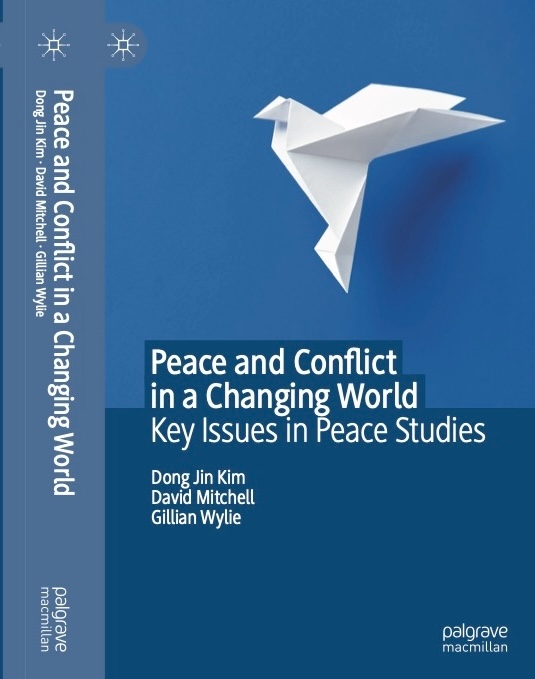
Written by a team of experienced teachers and researchers in Peace Studies, this book assesses the field of peace and conflict research from its origins to the present day. It introduces influential concepts and theories, and examines the processes and dynamics of peacebuilding. Using case studies from around the globe, the book discusses a range of key topics in Peace Studies, such as: the meanings of peace; the causes of violent political conflict; peace processes and peace agreements; international peace and security; peace activism and the role of civil society; human rights, transitional justice, and reconciliation; asylum, migration and borders; gender, war, and peace; sustainable development and peace; religion, conflict, and peace; arts, sport, and peace; and peace education. The book will be of interest to scholars and students in peace studies, international relations, security studies, war and conflict studies, conflict transformation, as well as anyone interested in the research and practice of peace.
Journal Article, 2024
The Agency-Structure Problem in Peacebuilding: Constructing a Niche in the Korean Conflict
The structural dynamics of the Korean conflict has evolved not only with the inter-Korean rivalry, but also the geopolitics of great power rivalries. The conflict structure was reinforced going through the Korean War and the Cold War. There have been several South Korean initiatives to build peace with North Korea in the post-Cold War era, however the peace process fluctuated due to the escalation of the US-North Korean conflict over the nuclear and missile development of North Korea, and the dispute over North Korea policy in the South Korean society. Building on the sociological understanding of ‘duality of structure’ and the biological insight of ‘niche construction’, this article demonstrates the South Korean potential, as a democratic state, to construct a niche space for its citizens’ peacebuilding with North Korea under the ongoing Korean conflict structure, as well as its limitations in protecting the space before scaling out the disruption of the conflict structure, when governments do not have a clear sense of agency about their policy due to the lack of consensus among its citizens.
Journal Article, 2023
You Realise We’re Not the Only Ones Stuck Living Like This: Comparative Learning, International Partnerships and Civil Society Peace Education in Conflict-Affected Societies
One of the capacities of civil society in peace processes is the promotion of peace-oriented attitudes among citizens through peace education. This article investigates how civil society peace education may be enhanced through collaboration with counterparts in another conflict arena. The article begins by discussing the potential and pitfalls of the comparison of peace/conflict contexts. The empirical findings are based on interviews and focus groups with peace educators in Northern Ireland and South Korea who have engaged in dialogue and partnerships with each other, and they indicate perceived benefits and impact of both the comparative learning to the personnel and the partnership to the organisations. The discussion sets out an ideal model of the peace educative impacts of comparative learning and encounter. Overall, the findings show how local-to-local engagements between peace processes can support the civil society contribution to peacebuilding.
Journal Article, 2022
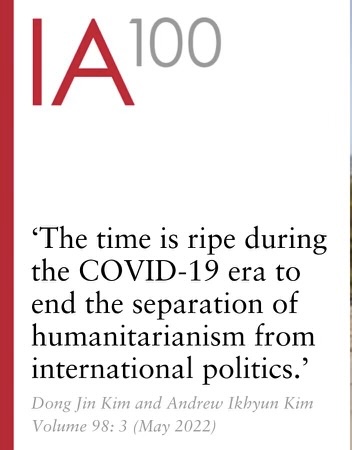
The COVID-19 pandemic has exposed increasing global inequality in responding to the issues of health. How do we resolve the tension between normative concerns for global responsibility and strategic concerns for national interest in facilitating health aid to vulnerable populations in low-income countries in the COVID-19 era? This article presents global health diplomacy as a conceptual framework that could overcome the dichotomy of humanitarianism and international politics, using health aid to North Korea during COVID-19 as a case-study. Health is a critical component of human dignity and can be a normative motivation for cooperation beyond sovereign borders. However, health is also an important element of national interest and can be a strategic motivation for transnational cooperation. The overlap between the moral and rational spaces in global health diplomacy demonstrates how COVID-19 assistance to North Korea’s vulnerable population is in the enlightened self-interest of donors to prevent resurgences of new COVID-19 variants. Moreover, this framework imbues all parties, including aid recipients such as North Korea, with the global cooperative responsibility to address health. In this sense, global health diplomacy can reframe the tensions between humanitarianism and politics, morality and rationality, and cosmopolitanism and nationalism, from antithetical to complementary.
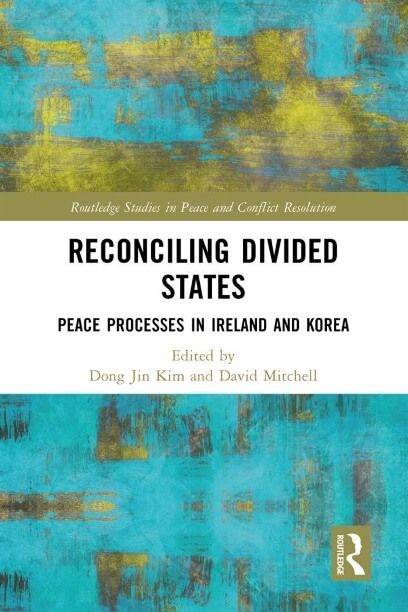
This book offers a distinctive perspective on peace processes by comparatively analysing two cases which have rarely been studied in tandem, Ireland and Korea. The volume examines and compares Ireland and Korea as two peace/conflict areas. Despite their differences, both places are marked by a number of overlaid states of division: a political border in a geographical unit (an island and a peninsula); an antagonistic relationship within the population of those territories; an international relationship recovering from past asymmetry and colonialism; and divisions within the main groupings over how to address these relationships. Written by academics and practitioners from Europe and East Asia, and guided by the concepts of peacebuilding and reconciliation, the chapters assess peace efforts at all levels, from the elite to grassroot organisations.
Journal Article, 2022
Sport and Strategic Peacebuilding: Northern Ireland and Korea Compared
This article contributes to the growing body of scholarship on sport’s peacebuilding capacity by comparing the role of sport in two peace processes, Northern Ireland and Korea. Uniquely, the analysis is guided by the concept of strategic peacebuilding which goes beyond the much-criticised liberal peacebuilding ‘toolkit’ and emphasises the importance of coordinated action at all levels and by many types of actor. The empirical sections examine the peacebuilding roles of sport at state level – in relation to elite sport, symbolism and diplomacy – and at grassroots level, particularly people-to-people projects. The article shows how and why sport has been able to play certain peacebuilding roles in each case, as well as the constraints on sport placed by structural characteristics of the peace processes. The article argues that the sporting domain can make interdependent peacebuilding inputs at each peacebuilding level, and thus has a distinct potential as a dimension of strategic peacebuilding.

Journal Article, 2022
This article explores lesson sharing between local civil society peacebuilders in the Korean and Northern Ireland peace processes. It presents reciprocal empowerment, a concept primarily utilized in women’s empowerment literature, as a useful conceptual framework to be developed for examining interactions between local civil society peacebuilders who have mutual self-interest to overcome obstacles in top-down peace processes. Recently, historical similarities and concurrences in the peace processes have been increasing the lesson sharing visits between Korean and Northern Irish peacebuilders. Based on the in-depth empirical research on these visits, this article argues that comparative consultations between peace processes would not only generate useful lessons for each context, but also empower local peacebuilders, civil society in particular, provided the comparisons and interactions are reciprocal, not unidirectional or hierarchical. In this sense, this article contributes to the conceptual and practical discussions of every day, emancipatory peacebuilding.
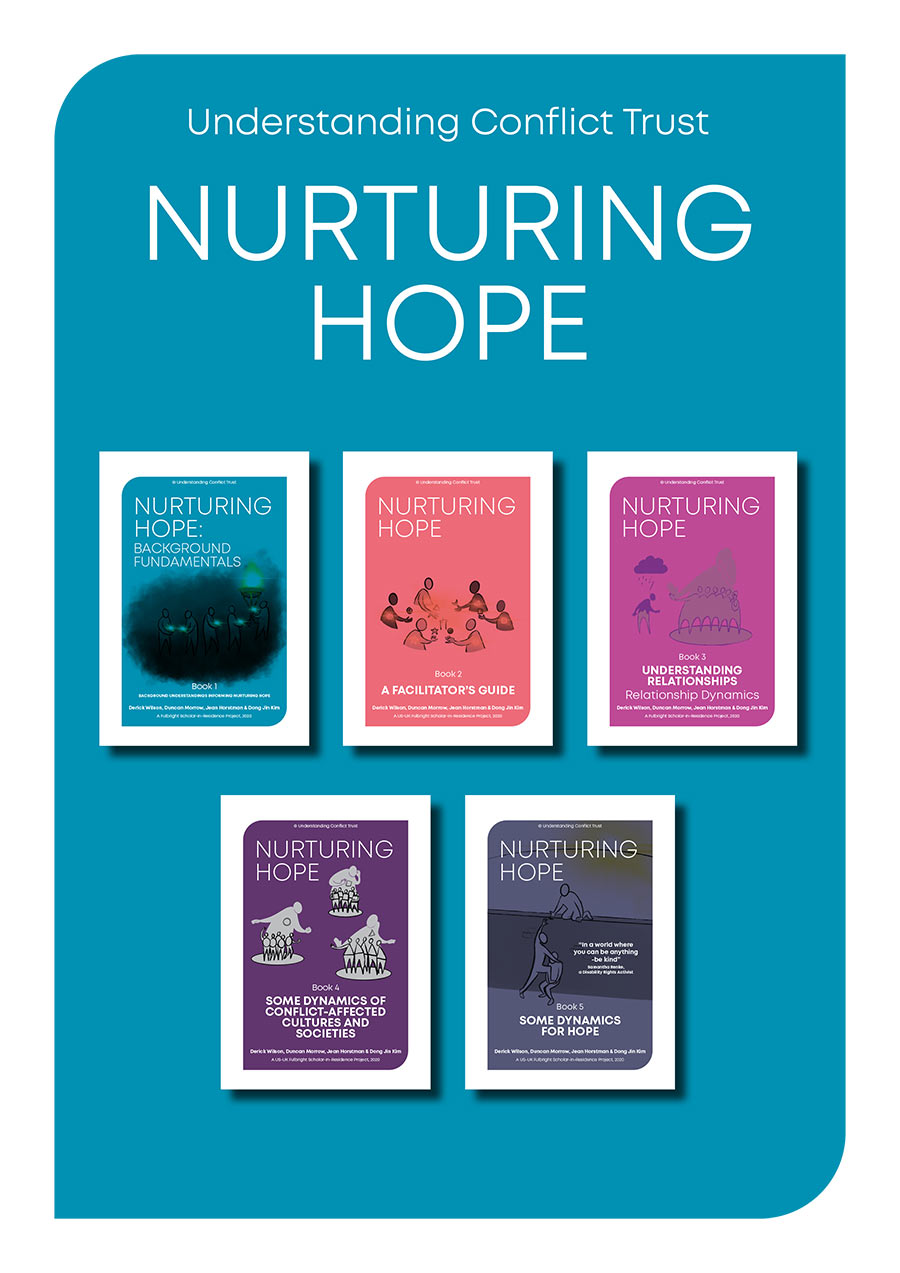
Book, 2022
Nurturing Hope’ is an extensive five–book learning resource, written by Derick Wilson, Duncan Morrow, J. Jean Horstman and Dong Jin Kim, being published by the Corrymeela Press. The ‘Nurturing Hope’ resource grows out of the experience of people in Northern Ireland, and the wider world, who chose to hope in times of darkness. They chose to find a way forward that included standing together with those who had been scapegoated. It draws on Corrymeela members’ decades of experience and was developed with learning partners in South Korea and the USA.
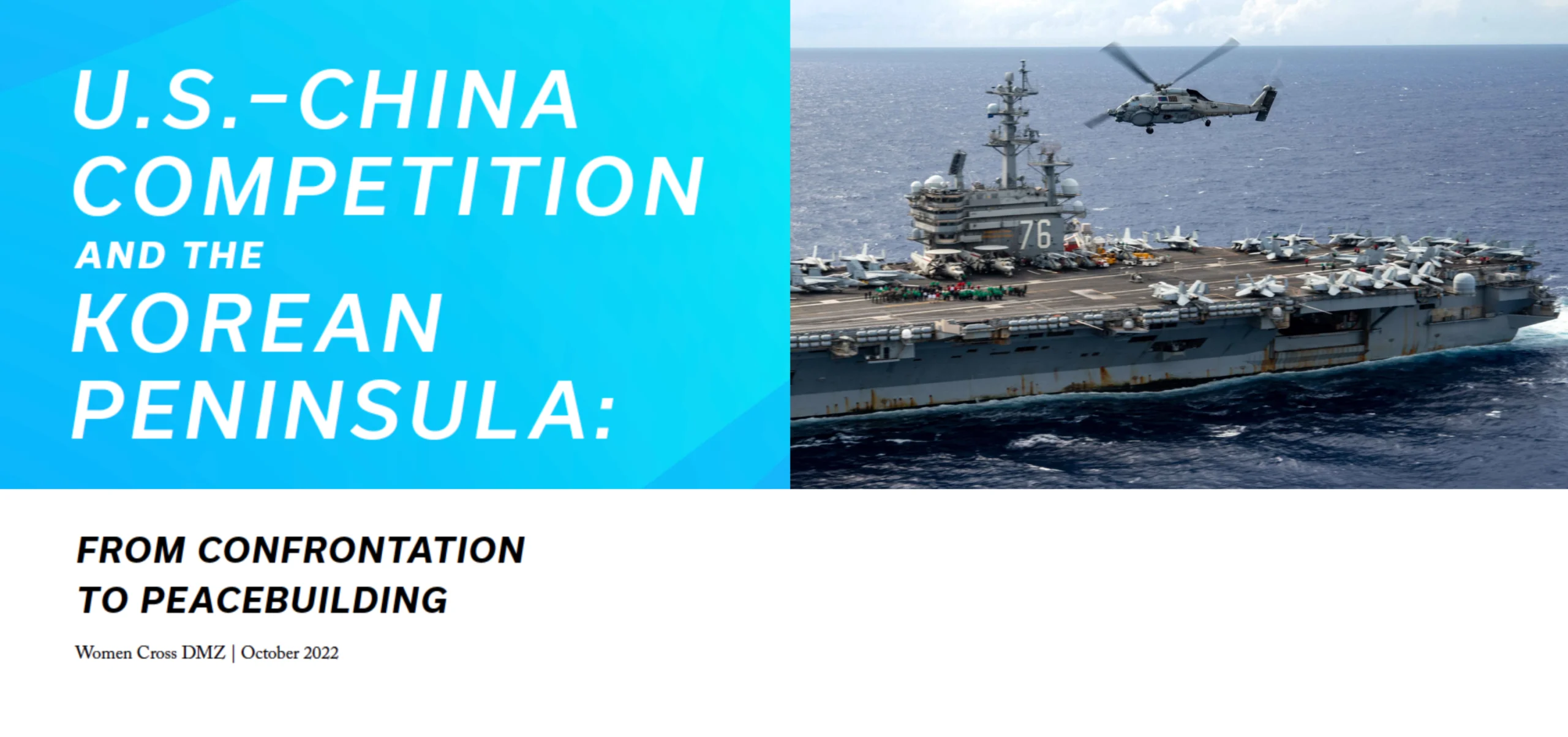
U.S.-China Competition and the Korean Peninsula: From Confrontation to Peacebuilding, shows how the Korean Peninsula has become the fault line for rising U.S.-China tensions. Released by Women Cross DMZ, the report argues that peacebuilding in Korea offers a much-needed opportunity for U.S.-China cooperation, which would help to reduce tensions, build trust, and, most crucially, avoid a possible war.

Journal Article, 2021
Mobilising Social Movement for Peace: A Case Study on Christian Ecumenical Organisations in the Context of the Korean Conflict
Informed by the resource mobilisation theory, this article conducts a case study on Christianity in Korea, in order to explore the nexus between religion and social movements, and how this nexus could contribute to peace, rather than violence. Given its geopolitical dimensions, involving nuclear weapons and the legacy of the Cold War, the role of religion in the Korean conflict has been under-researched. Nonetheless, Christianity has influenced the Korean conflict, with its association with anticommunism, as well as with peace movements. This article argues that Christian ecumenical organisations in the context of the Korean conflict utilised their social resources for peace and reconciliation, when they rediscovered the just peace tradition in Christianity. This article contributes to theoretical and practical discussions surrounding religion, war, and peace, by conceptualising just peace in the Christian tradition, and by adding empirical substance to the nexus between ecumenism and social movement for just peace.
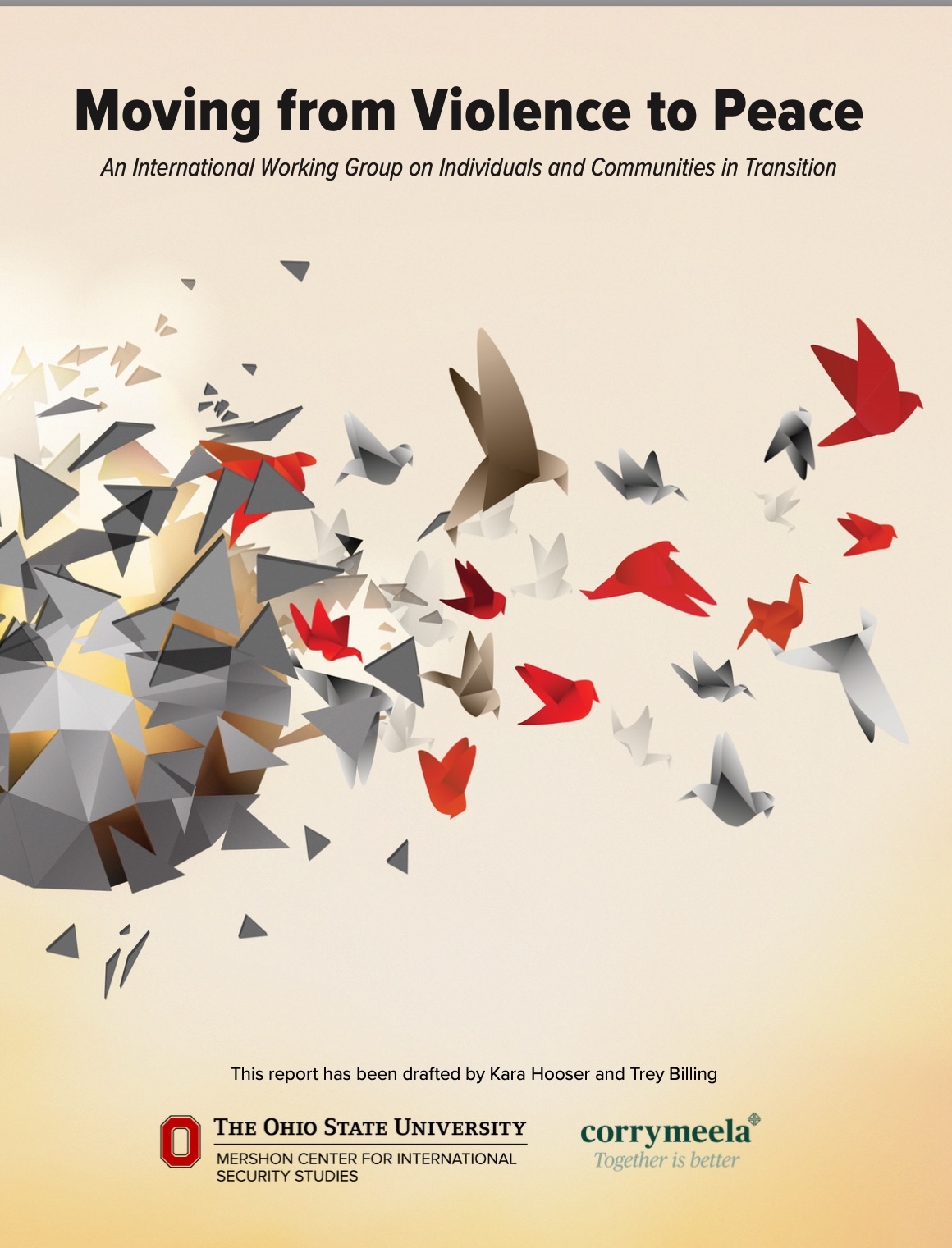
Report, 2021
The report looks at communities and individuals across the world in varying states of transition from violence to peace. Although the character of violence differs, from paramilitarism and criminal gangs to civil war and genocide, societies moving toward peace share similar challenges. Drawing on experiences from Colombia, Northern Ireland, the Korean Peninsula, Rwanda, and Yemen, it identifies overlapping themes.
Book Chapter, 2020
The Palgrave Encyclopedia of Peace and Conflict Studies
The Korean peacebuilding case study has not been drawing substantial attention in peace and conflict studies scholarship. Given its extensive geopolitical dimensions, involving the Cold War legacy and nuclear weapons, it appears to be better suited for the field of international relations. However, there have been several South Korean civil society groups who built relationships with people in North Korea across the Demilitarized Zone, and promoted civic values for peace, in order to overcome the fragile armistice situation and build a sustainable peace on the Korean peninsula. Exploring the role of Korean civil society is expected to narrow the gaps in the Korean peace process, both in terms of knowledge and practice, and to add significant empirical substance to discussions in peace and conflict…
Journal Article, 2020
Beyond identity lines: women building peace in Northern Ireland and the Korean peninsula
This article explores the challenges and contributions of women in building and sustaining peace in protracted conflicts by conducting a comparative case study on Northern Ireland and Korea. Similarities in the histories of the conflicts and the concurrences in the peace processes have been attracting policy makers and researchers to share lessons between the Northern Ireland and Korean peace processes. However, the peacebuilding role of women and their transversal perspective have not yet received significant attention compared to the high-level agreements, signed predominantly by male politicians. This article identifies the similarities in the peacebuilding activities of women in Northern Ireland and Korea, in terms of their recognition of the interconnection between identity politics and patriarchy, building relationships across the divide through transversal dialogue, and initiating nonviolent peace movements against the militarism of their societies.
Book Chapter, 2020
Philosophical Perspectives on Contemporary Ireland
Civil Society and Non-Violent Political Action in Northern Ireland
Northern Ireland provides an illuminating example of the role of civil society in promoting non-violent responses to a protracted conflict involving both explicit political violence and structural injustices embedded in political institutions. This chapter examines non-violence as a distinctive category of political action that helps us understand the impact of civil society groups on peace and conflict in Northern Ireland, from the period known as “the Troubles” (1968–1998) to the challenges resulting from the Good Friday Agreement of 1998. It suggests that the impact of non-violent political action in Northern Ireland was limited by at least three factors….
Book Chapter, 2019
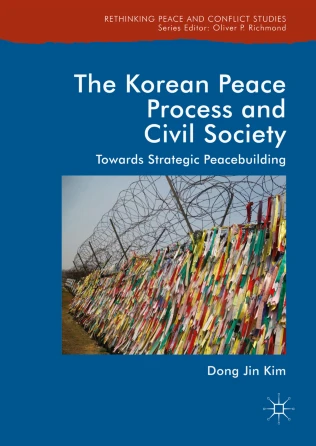
The Post-Cold War era witnessed a dramatic rise in breakthroughs for peace processes, includingthe Korean peninsula, between parties mired in protracted conflict. However, many such processes broke down within a short period of time. This book explores the possibilities for comprehensive and sustainable peacebuilding strategy in the Korean peace process, beyond reaching an agreement, by reviewing diverse peacebuilding activities from government and civil society.

Journal Article, 2018
Sharing Lessons between Peace Processes: A Comparative Case Study on the Northern Ireland and Korean Peace Processes
In both Northern Ireland and Korea, the euphoria following significant breakthroughs towards peace in the late 1990s and early 2000s turned into deep frustration when confronted by continuous stalemates in implementing the agreements. This article explores the two peace processes by examining and comparing the breakthroughs and breakdowns of both, in order to identify potential lessons that can be shared for a sustainable peace process. It also examines the differences between the two peace processes in addressing major challenges: disarmament; relationships between hard-line parties; cross-community initiatives. The comparative case study finds that the commitment of high-level leadership in both conflict parties to keeping negotiation channels open for dialogue and to allowing space for civic engagement is crucial in a sustainable peace process.
Journal Article, 2017
Building Relationships Across the Boundaries: The Peacebuilding Role of Civil Society in the Korean Peninsula
The expectations for the role of civil society are growing due to an abysmal record of high-level political leadership in reaching an agreement and a sustainable peace process. How much impact can civil society have and what roles can it take in the peace process? This case study of South Korean civil society shows how the civil society was able to bridge the horizontal and vertical boundaries of the Korean conflict with the support of a global civil society, and created a hospitable public atmosphere for the peace process in the 1980s and 1990s. However, the space for the civil society to make a contribution in the Korean peace process required the interdependency of the roles of high-level and civil-society leadership in the interplay between the international and domestic political environments. The peacebuilding role of South Korean civil society demonstrates that the horizontal capacity of civil society alone cannot guarantee a breakthrough and sustainability in a peace process, but if it is coordinated with the vertical capacity, civil-society peacebuilding can be a useful platform for sustainable peacebuilding.